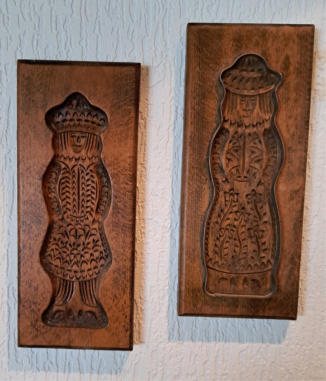
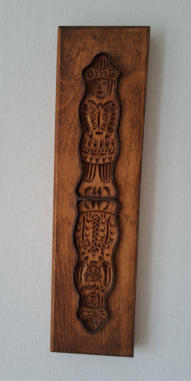
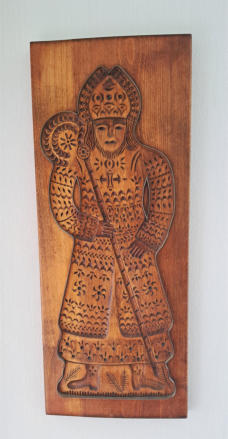
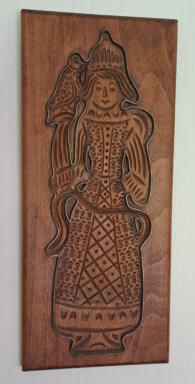
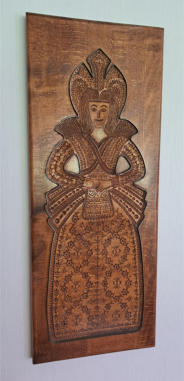
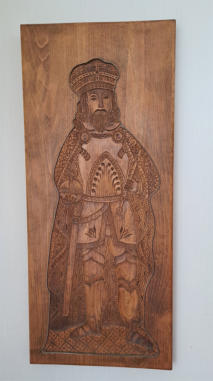
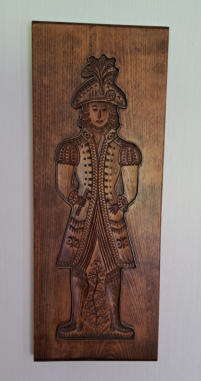
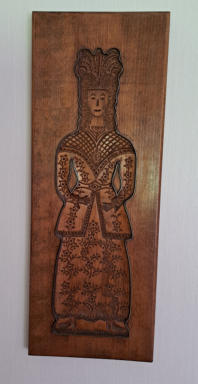
An old tradition is the production of moulds in which printen (gingerbread) were made. The pattern is carved into beech wood. Unlike speculoos moulds, the printen dough is very hard. After pressing it into the mould, the excess dough above the metal edge was cut off with a metal wire. Printen moulds have a metal edge, which also determines the height of the dough. Speculoos moulds do not have a metal rim, as the pattern is recessed. Speculoos dough is softer and can therefore be rolled into the mould. Unlike speculoos moulds, historical printen moulds are also available in designs up to 1 metre high.
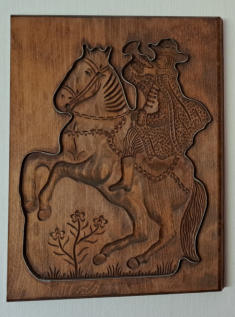
Printen were not only sweet breads, but also served as a means of conveying information. There were also motifs for girls and boys, bridal couples, etc. People (e.g. Emperor Karl) and even technical achievements (steamboats) were also used as motifs. The journeymen travelled around and thus contributed to the distribution of the motifs.
The term Printen is related to the word print. All of the shapes shown were carved by me using traditional methods. Historical motifs served as templates and guidance.
I have always been interested in craftsmanship. Wood is a wonderful material. That’s why I was happy to learn this ancient craft as a teenager. I carved the gingerbread moulds (pictures) with sculpting chisels. Gingerbread moulds were traditionally made from beech wood because of its durability. Over time, the dough caused the moulds to darken. With these moulds (pictures), the effect was created using rustic stain.